
Reverse Osmosis for Water Treatment: How RO Systems Work for Sachet, Bottled and Dispenser Water
Clean and safe water is essential for homes, businesses and water production companies. Whether you are producing sachet water, bottled water or supplying water through dispensers, the quality of the water treatment process plays an important role in the final product.
One of the most widely used technologies for advanced water purification is Reverse Osmosis (RO).
Reverse osmosis is a water treatment process that uses pressure to force water through a semi-permeable membrane. The membrane allows water to pass through while reducing many dissolved substances and contaminants. The process produces two streams: treated water, known as permeate, and concentrated reject water, also called concentrate or brine.
For water businesses, RO can form an important part of a treatment system designed for sachet water, bottled water and dispenser water.
But what exactly is reverse osmosis, how does it work, and why is it important in commercial water treatment?
Let’s take a closer look.
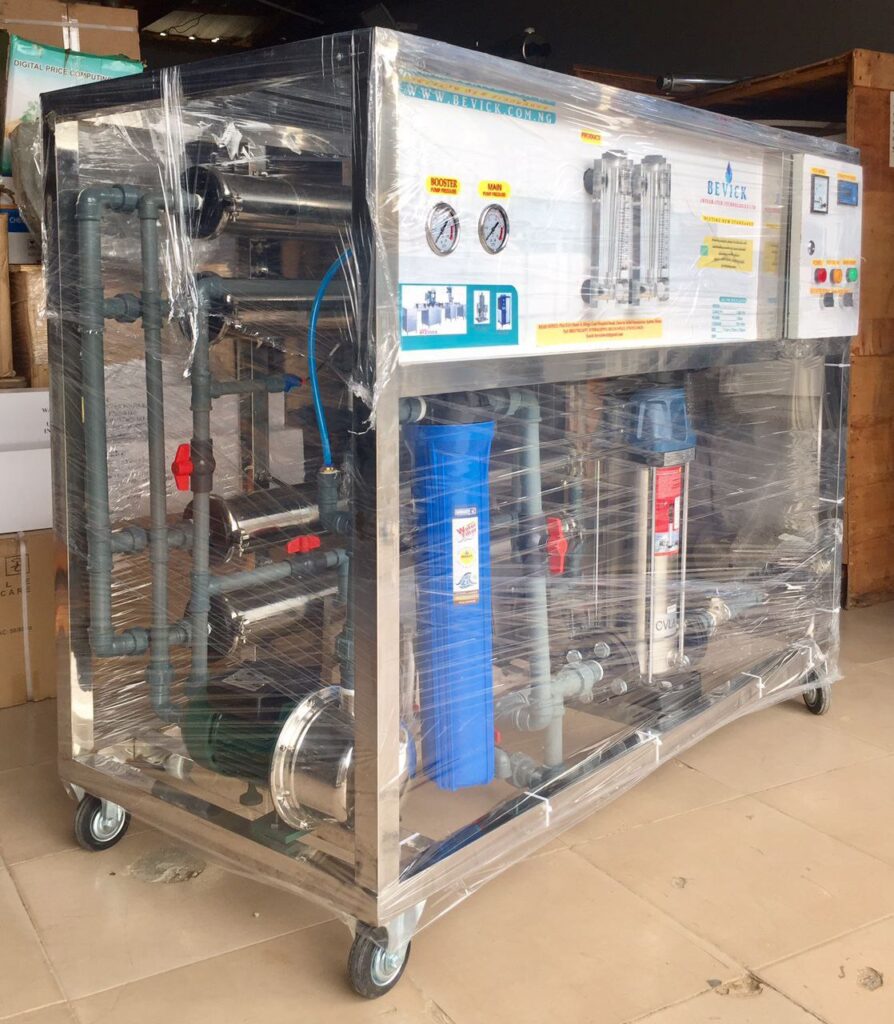
What Is Reverse Osmosis?
Reverse Osmosis, commonly called RO, is a membrane-based water treatment process used to reduce dissolved substances and other contaminants in water.
In a normal osmosis process, water naturally moves through a semi-permeable membrane toward the side with a higher concentration of dissolved substances. Reverse osmosis reverses this movement by applying pressure to the water.
The pressure forces water through the membrane while many dissolved salts, minerals and other contaminants are retained in the concentrated reject stream.
The water that passes through the membrane is called permeate or product water, while the water carrying the concentrated rejected substances is called reject water, concentrate or brine.
This makes RO particularly useful when the objective is to reduce dissolved solids and a broad range of contaminants rather than simply remove visible particles.
How Does Reverse Osmosis Work?
A typical RO treatment process involves several stages before and after the RO membrane.
1. Raw water enters the treatment system
Water from a borehole, well, tank or other source enters the water treatment system.
Before the water reaches the RO membrane, it may need to pass through pre-treatment equipment. The exact treatment train depends on the quality of the source water.
2. Pre-treatment removes substances that can damage the membrane
Pre-treatment can include processes such as sediment filtration, activated carbon filtration, water softening or other treatment methods.
Pre-treatment is important because suspended particles, hardness and certain chemicals can cause membrane fouling, scaling or damage.
3. A high-pressure pump applies pressure
A pump increases the pressure of the water so that it can pass through the RO membrane.
4. Water passes through the RO membrane
The semi-permeable membrane allows water molecules to pass through while retaining many dissolved substances.
The water that passes through becomes the treated product water.
5. Reject water leaves the system
The substances that do not pass through the membrane remain in the concentrated reject stream.
Therefore, an RO system produces both treated water and reject water.
6. Post-treatment may be used
Depending on the intended application, the treated water may undergo additional processes such as polishing filtration, remineralisation, UV treatment or other appropriate treatment before final use.
The complete treatment process should always be designed according to the quality of the source water and the required finished-water quality.
RO System Maintenance: What You Need to Know
Like other water treatment equipment, an RO system requires proper maintenance to continue performing effectively.
Important maintenance activities may include:
Replace pre-treatment filters
Sediment and carbon filters have a limited service life. They should be inspected and replaced according to operating conditions and the manufacturer’s recommendations.
Monitor the RO membrane
The membrane is one of the most important components of an RO system.
Operators should monitor parameters such as:
- Feed-water pressure
- Product-water flow
- Reject-water flow
- Total dissolved solids (TDS)
- Conductivity
- Membrane performance
A noticeable change in performance can indicate fouling, scaling, damage or another problem.
Keep the system hygienic
Storage tanks, pipes, dispensing points and other components that come into contact with treated water should be maintained hygienically.
Follow a maintenance schedule
Regular maintenance is preferable to waiting until the system develops a major problem.
Need the Right RO Water Treatment System for Your Business?
Whether you are setting up a sachet water factory, bottled water production line, dispenser water business, or another water purification project, choosing the right treatment system is essential.
At Bevickgroup, we understand that every water treatment project is different. The right solution starts with understanding your source water, required water quality, production capacity, and business needs.
Our goal is to help you choose a properly designed Reverse Osmosis (RO) water treatment system that supports reliable water quality and efficient production.
Planning a new water treatment project or upgrading an existing one? Contact Bevickgroup today to discuss your requirements and find the right RO water treatment solution for your business.
Leave A Comment