
Water purification does not end after filtration.
For businesses producing sachet water, bottled water and dispenser water, the final disinfection stage is an important part of maintaining water quality before packaging and distribution.
One technology commonly used for this purpose is ozonation.
An ozone generator produces ozone (O₃), a highly reactive form of oxygen that can be introduced into treated water to help inactivate microorganisms and oxidize certain contaminants.
Ozone is recognized as a powerful oxidant and can be used as a primary disinfectant in drinking-water treatment.
For a packaged-water production facility, however, an ozone generator should not be viewed as a replacement for the entire purification system. It is normally incorporated into a properly designed treatment process that may include filtration, activated carbon, reverse osmosis, UV treatment and other stages depending on the raw-water quality.
This guide explains how an ozone generator works, where it is installed, how it is used for sachet, bottled and dispenser water production, and what to consider when choosing one.
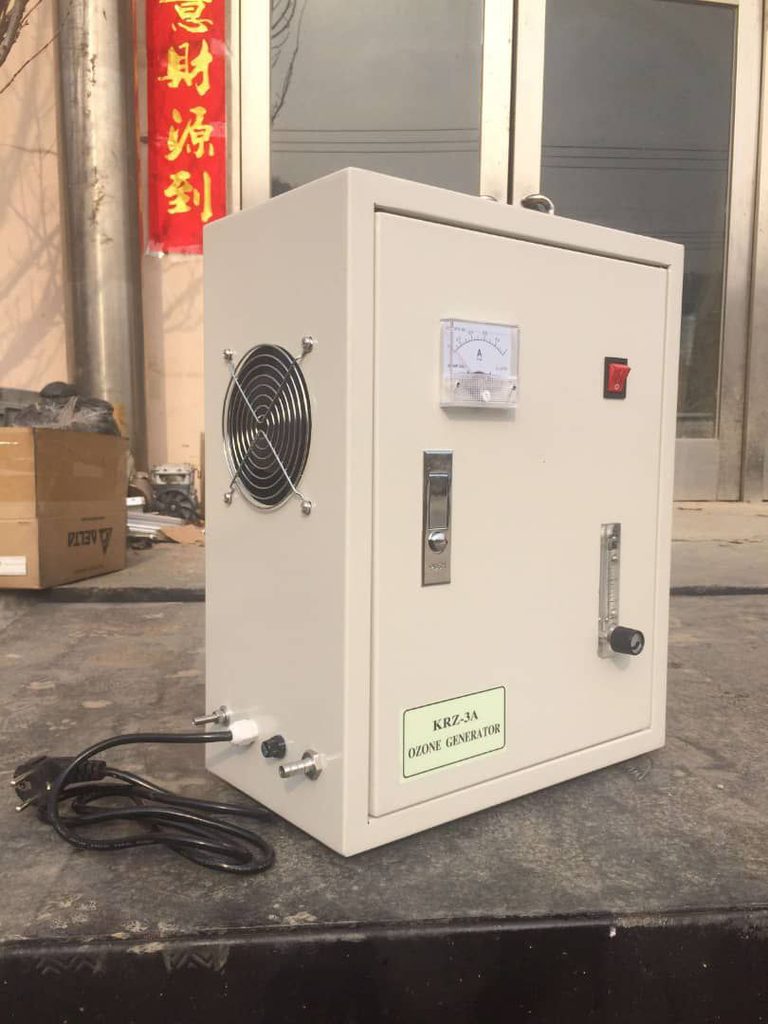
What Is an Ozone Generator?
An ozone generator is a water-treatment device that produces ozone gas (O₃).
Ozone consists of three oxygen atoms and is considerably more reactive than ordinary oxygen (O₂). Because of this high oxidation potential, ozone can react with microorganisms and various organic and inorganic substances in water. Ozone is a powerful oxidizing agent. When properly dissolved into water and given adequate contact time, it can inactivate many microorganisms and oxidize certain organic and inorganic contaminants.
In water treatment, ozone is generally generated on-site by passing dry air or oxygen through a high-voltage electrical field. The resulting ozone-rich gas is then transferred into the water through an appropriate contact system.
A typical ozone treatment system consists of several important components:
- Gas/oxygen feed system
- Ozone generator
- Ozone injection or diffusion system
- Ozone contact tank
- Off-gas treatment/destruction system
How an Ozone Water-Treatment System Works
A typical commercial arrangement can be represented as:
Oxygen Supply
→ Ozone Generator
→ Ozone Injector
→ Water Stream
→ Contact Tank
→ Off-Gas Management
→ Treated Water
Where Is an Ozone Generator Installed in a Water Treatment Plant?
The ozone generator is usually installed after the required pre-treatment and filtration equipment, with the ozone injection system positioned in the treated-water flow before a properly designed contact tank or contact system.
However, the exact position depends on the purpose of ozone treatment. Ozone may be used for oxidation of contaminants, primary disinfection, or treatment of finished water, so the system should be designed around the raw-water quality and the desired treatment outcome.
Ozone in Sachet Water Production
A simplified production line may look like:
Raw Water → Pre-Treatment → Filtration → RO, if required → Fine Filtration → Ozone Injection → Contact System → Product Water Tank → Sachet Filling Machine
Ozone in Bottled Water Production
A typical process can include:
Raw Water → Pre-Treatment → Filtration → RO, if required → Fine Filtration → Ozone Treatment → Contact/Storage → Bottle Rinsing → Filling → Capping → Labeling
Ozone in Dispenser Water Production
A typical process may look like:
Water Treatment → Fine Filtration/RO, if required → Ozone Treatment → Product Water Tank → Empty Jar Inspection → Jar Washing → Jar Sanitization → Filling → Capping → Distribution
How to Determine the Right Ozone Generator Capacity for Your Water Factory
The first thing to consider is your water flow rate, that is, how much water the system must treat per hour, is it 500, 1000 liters per hour. Then test the water quality. Obtain a laboratory analysis of the water source to know the PH, Iron, Manganese, Microbiological quality etc. Then define the purpose of the Ozone treatment, is it for the oxidation of iron, manganese, sulfides and certain organic substances, disinfection etc. Then understand ozone generator ratings. They are rated according to their ozone production capacity, such as : 5 g/h, 10 g/h, 20 g/h, 50 g/h, 100 g/h, and so on
Conclusion
Choosing the right ozone generator for sachet water, bottled water, and dispenser water production is an important investment in the efficiency, safety, and reliability of your water-treatment system. The right equipment should be selected based on your water quality, production capacity, treatment objectives, ozone requirements, and the overall design of your treatment plant.
At Bevickgroup Packaging Machineries, we understand that every water factory has different production requirements. That is why we focus on providing reliable ozone generators and water-treatment equipment designed to meet the practical needs of sachet water, bottled water, and dispenser water producers.
Whether you are setting up a new water factory, expanding your production capacity, or upgrading an existing water-treatment system, We will hold you by the hand to make sure your water quality is top-notch. Why not get in touch today?
Leave A Comment